



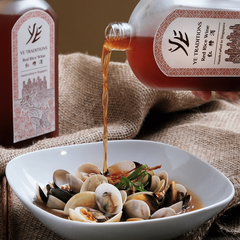

Reaching for a Shaoxing wine substitute halfway through a recipe is a common kitchen moment, and the good news is that a few pantry swaps come remarkably close. Shaoxing wine gives Chinese dishes their signature savoury depth, so the best replacements share its nutty, fragrant, slightly sweet character rather than just adding liquid.
Below are the seven substitutes worth knowing, ranked from closest match to last resort, plus the ratios to use so your stir-fry, braise, or marinade still tastes right.
First, what is Shaoxing wine?
Shaoxing wine is an amber Chinese cooking wine brewed from fermented glutinous rice. It belongs to the wider family of Chinese rice wines (huangjiu, 黄酒) that have flavoured home cooking for centuries. What matters for a substitute is the balance you are recreating: gentle sweetness, a rounded savoury note, and an aroma that lifts meat and seafood.
One thing many cooks discover is that a lot of supermarket cooking wine is not pure rice wine at all. It often has added salt and caramel colouring, which is why a clean, handcrafted bottle behaves so differently in the pan.
The best Shaoxing wine substitute: handcrafted rice wine
The closest swap for Shaoxing wine is another pure rice wine. Our Hakka Yellow Rice Wine (客家黄酒) is brewed in Singapore from just glutinous rice, water, and a natural starter, with no salt, no added sugar, and no preservatives. Because it is unsalted, you control the seasoning yourself. Use it one-to-one in place of Shaoxing wine.
7 Shaoxing wine substitutes, ranked
- Handcrafted yellow rice wine — the closest match. Swap 1:1.
- Dry sherry — a widely recommended stand-in with similar nutty depth. Use 1:1.
- Huangjiu or mijiu — other Chinese rice wines from the same family. Swap 1:1.
- Dry sake — cleaner and lighter, so add a small pinch of sugar. Use 1:1.
- Mirin — sweeter, so reduce any sugar in the recipe and use slightly less.
- Dry white wine — brighter and more acidic; fine in a pinch for braises. Use 1:1.
- Non-alcoholic swap — white grape juice with a few drops of rice vinegar, or a splash of chicken stock.
Substitutes to avoid
Skip rice vinegar on its own (it is sour, not sweet) and skip salted cooking wine, which throws off your seasoning. If a dish leans on the wine for fragrance, such as steamed fish or drunken chicken, a real rice wine will always taste truer than a workaround.
Cooking Chinese food often? A clean bottle beats a substitute every time. Explore our handcrafted rice wines →
Leave a comment